
A creative response to Macedonian Erasure/Soft Power
RE: The Macedonian Question

I’ve been in Macedonia/Ohrid for almost 3 weeks with my daughter and my partner. It has been fantastic. I’ve been thinking a lot about something I wrote two years ago when I first visited the homeland and I’d like to share it.
We were staying in Bitola and its lost-ness spoke to me in a way I’ve not yet reconciled but nonetheless continue to draw inspiration from.
This time round I know much more of the Macedonian language and we know much more of Macedonia; its land, its people, its food and its spirit. I realise now that I’ve been somewhat on a journey of self and national discovery over the last few years. One I couldn’t have gone on if I had not returned.
I am filled with awe and wonder for the disputed land and peoples known as Macedonia and Macedonians. Everyone is a Baba to my daughter. Every face feels like family and surprisingly, the identity politikking we obsess over in Australia is peculiarly absent. It’s almost as if the propaganda of national identity is and always will be a distraction. A periodic whack-a-mole of corporate and corrupt agendas incapable of ontological security so they appeal to historical “truths”. To purity. To a continuation which denies in implicit and explicit ways. In benign and dangerous ways.
2 years on and what I wrote below is what I still love about Macedonia. A good friend and fellow Eastern European said something of the like at dinner in Thessaloniki. The Balkan mixed-ness is not the exception, it’s the rule. We would do better to pay less attention to the export of nationalism and more to regionality, to peculiarity and dialects, to the Deluzian swerve even.
I’m also very excited to read these two books on the erasure of Macedonian Identity by its national neighbours: Greece, Bulgaria, Serbia & Albania.
The first, a historical treatise on the Greek Civil War and the displacement of Macedonian peoples: ‘Children of the Greek Civil War: Refugees and the politics of memory’
The second a piece of exploratory non-fiction connecting the two great lakes of Prespa and Ohrid as well as the nations which border them; Greece, Albania and Macedonia - ‘To The Lake: A Balkan Journey of War & Peace’
I have so much more to say. But also now is the time to read, learn and live. Macedonia may not exist in the future. Perhaps this will be our strength? Such a sentiment appears defeatist but its borne out of a deadly combination of pragmatism and optimism. Our legal, military and popular power is defanged in post Yugoslavia. Our kindness and connection to land and each other is alive and well.
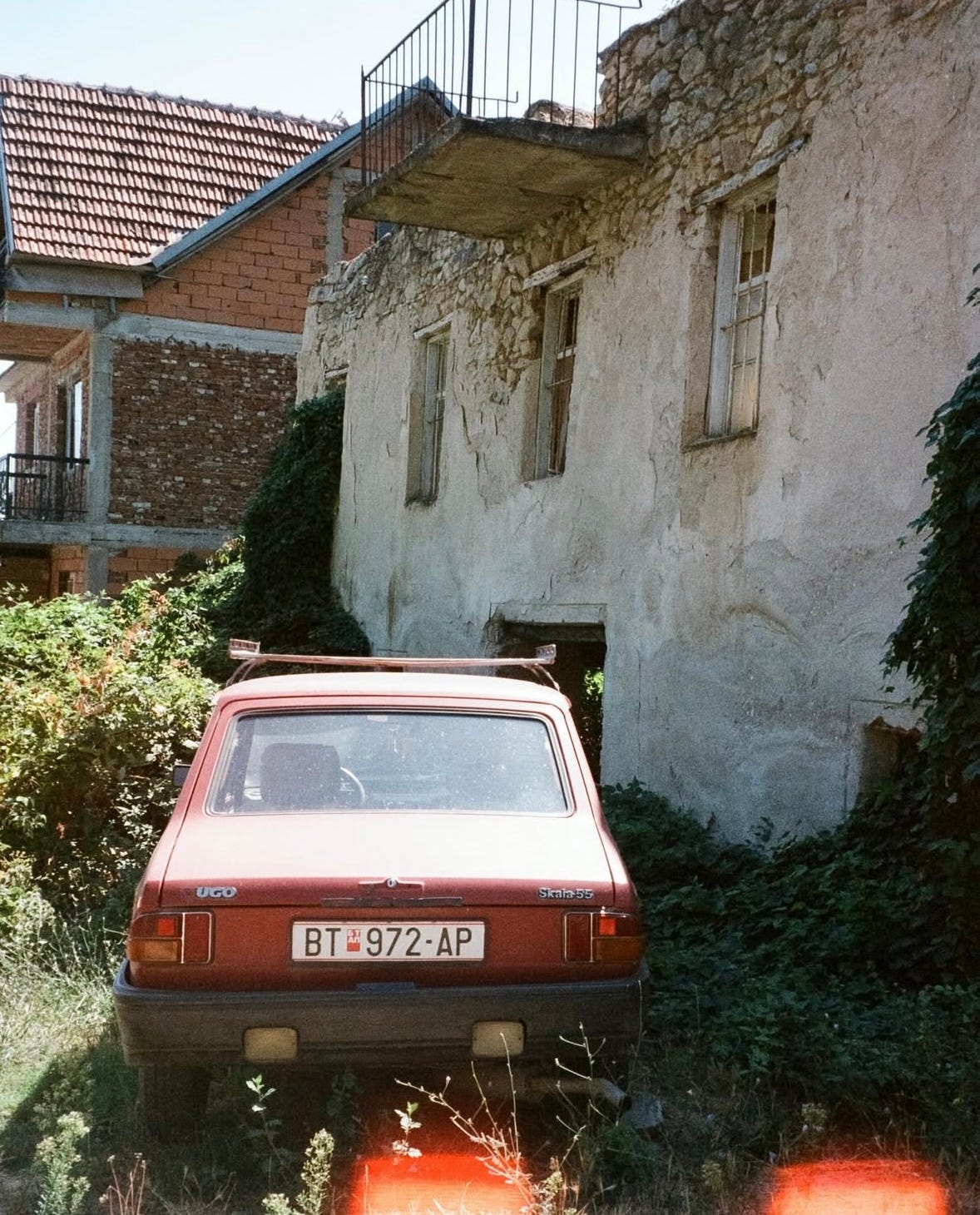
In Bitola the people rub shoulders with collapse. As do the buildings. But they all appear to be unfazed by degradation or… unable to do anything about it. So don’t call it resistance and definitely don’t call it a comeback. For those that are here, there is life which has the qualities of being lived. Kids ride bikes and bark along with the stray dogs. Women emerge from the winding alleyways, ready for a perfectly fine pizza or a scoop of gelato. Men sit and smoke as good Balkan men should. Not like me.
It all feels pre-capital, akin to an imagination of Georgia I have by way of my friend Boris. There’s commerce but no corporations. There’s commodities but no commoditisation. There’s markets but no marketisation. Perhaps it’s pre-suffixes. No “ions” or “isms”. That stuff is Greek. That stuff is Serbian. That stuff is Bulgarian. That stuff is Turkish. And as of late, that stuff is Albanian.
Bitola has managed to make the inside outside. It has exteriorised interiority. It’s a city of otherness in a country of minorities. But this is only something which can be stumbled upon. Thrown into. It’s a corner a young woman must turn on her way to dinner. Its the pauses in conversation between bark and laughter. It’s the inevitable touch of plastic chairs on metal tables. It’s emergent. On its own time. A guest in its own house. And so the will here is wild and negative. It’s Schopenhauerian. Which is hard for me to admit. Which is hard for the world to admit.
The city and the country feel like a dispute. A rupture which many would desperately desire to have resolved. To have translated, broken down and sold off to the highest bidder or loudest nationalism. But I have a sneaking suspicion, a hunch, that there’s something that will always evade understanding. Either from the inside or out. A doubling of confusion.
And so as I walk those same winding alleyways, I hear the buildings and the trees and the roads and the dogs and even the smoke and the cevapi. I listen, like a christmas lunch in Greenacre. I latch on to words I know, I give up when sentences sprawl on with no chance for grounding. I tease and joke and conspire and pontificate with my cousins. I watch my baba attempt to walk on her bad knees. And I watch my Dedo sit. Silent. And I understand that I’ve misunderstood. And I always will.
Good post! And kudos for mentioning To The Lake, written by my dear friend Kapka Kassabova. The chapter 'the Howl' set in areas around Prespa lakes now in Greece feature a person called Nick who's from Australia. That's me!
Thank you! Yes I’m very excited to read and I will look out for “Nick” in the book :)